Does Your TV News Talent Agent Possess the Skills for Effective Crisis Management?

If you’re a successful broadcast TV news anchor, reporter, or meteorologist, then you probably have a TV news talent agent looking out for you.

After all, having someone with connections in the industry is crucial for getting your foot in the door. And with a good agent, you’ll find out about available jobs before it’s public information.

But one of the more overlooked benefits of an agent is having someone who can easily and effectively put out fires. Does your agent have the skills for effective crisis management?

Required Skills for Effective Crisis Management

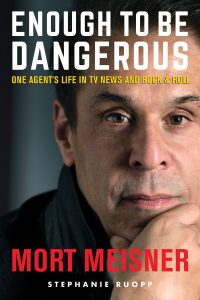
Long-time TV news talent agent Mort Meisner is an expert in crisis management. With over three decades of experience under his belt, he’s learned and then honed many qualities that have helped make him successful in crisis management. And this is a necessary skill set when working in broadcast news.

In dealing with a crisis, he strives to be the following:

  1. Fair-Minded

For Mort, being fair-minded means considering every viewpoint, concept, or idea carefully. Yet also understanding that each position and viewpoint does not have the same merits. In considering every side of the argument, he can see that there are multiple potential courses of action in responding to a crisis. From there, he tests out the most viable options to determine their merits, as well as possible shortcomings.

  1. Courageous

Being fair-minded shouldn’t be confused with just rolling over, though. Mort also sees the value in challenging conflicting ideas. Particularly those that are strongly supported or rejected. From his many years of experience, he’s learned that every idea must be challenged to ensure it stands up to scrutiny. After all, this is the only way to ensure that he can keep growing and evolving in his crisis management techniques. For Mort, no concept is ever beyond questioning.

  1. Empathetic

Mort’s ability to understand another person’s thoughts, perspective, or situation is partially learned, but partially built in. He’s a naturally empathetic soul who always seeks to understand another’s viewpoint before challenging it. He recognizes the power of acknowledging times in the past when he held one belief, but then changed his mind when presented with a more compelling point of view. He understands all too well how people can stay mired in beliefs that don’t serve them because they are comfortable or familiar.

  1. Persevering

Crisis management demands time and patience to develop a foundational understanding of the situation. But it also requires dogged persistence and perseverance to grasp the situation, then hone the necessary cognitive skills to address the problem.

  1. Autonomous

First, managing a crisis requires the ability to be presented with new evidence and points of view, then freely ask questions, adjust perceptions, and challenge beliefs based on these. And that means a crisis manager must have autonomy. During a crisis, Mort strongly encourages an environment where non-judgmental and open discussions can bloom. In this constructive and respectful environment, he culls the information and independently synthesizes the knowledge without confrontation and with a degree of wisdom. This contributes to more productive outcomes.

  1. Humble

Finally, humility is a core trait necessary for successful crisis management. And Mort has this in droves. He’s well-grounded in an understanding of his capabilities, while simultaneously grasping the limitations of his knowledge and skills. Mort does not purport to know or understand everything and strives for better solutions and answers than what he may have to offer. After all, he recognizes that perfection doesn’t exist and that some of the best lessons and solutions have come from recognizing his own mistakes.

How Well Does Your Agent Handle a Crisis?

Are you confident that your current agent possesses the skills for effective crisis management?

You can be certain Mort Meisner does. As a nationally-renowned veteran TV news talent agent, there’s not a crisis that he can’t successfully manage.

So contact Mort Meisner today. You can be confident that he’ll always have your back.

Mort Meisner Strikes the Perfect Balance As An Agent

If you’re looking to work with one of the nation’s top TV news talent agents, then Mort Meisner is your guy. He’s kind, charitable, and enormously personable. And he really CARES about his clients.

But he also believes in hard-driving honesty, not tip-toeing around talent, and telling it like it is. It’s these qualities that not only helped him resuscitate several TV stations across the country during the 1970s and 80s, but have scored him an impressive roster of TV news talent today.

This is because Mort Meisner strikes the perfect balance. And it’s a balance that’s taken decades to perfect.

The Story of Craig Negrelli

Back in the 1980s, if you were going to work at a station that Mort Meisner was managing, then you were expected to meet up to (and beyond, ideally) his high expectations. Craig Negrelli rose to the occasion.

Craig’s agent at the time said he’d never be an anchor. That he just didn’t have what it took. Mort disagreed. He saw something in Craig that others hadn’t. While Craig wasn’t anchor material when they first met, Mort felt he could be.

Mort had no intention of making Craig’s journey an easy one. He drove him hard and wasn’t willing to give him any breaks he didn’t deserve. Yet, he also encouraged him, guided and coached him, and gave him props when he earned them.

Craig is now a successful anchor and reporter at Straight Arrow News after anchoring in markets such as Omaha (for more than a decade), Kansas City, Albuquerque, Buffalo, Sarasota, and Wichita. And these days, Mort is Craig’s agent.

The Rise of Al Allen

As Mort worked his way up the news director/management ladder, he continued to notice burgeoning talent around him. But he also noticed that when these candidates were Black, they were not given the same chances. Black male talent in the industry at that time was grossly referred to as The Garbagemen.

They were given bottom-of-the-barrel, lackluster stories that nobody else would cover. So there wasn’t much motivation for them to improve. Furthermore, management didn’t believe in them and did nothing to foster their growth. Until Mort came along.

Such was the case with Al Allen. Mort could see that Al was an unquestionably good reporter. But he suspected management had only hired him as a token and had no interest in seeing what he could really do.

Mort changed that. He came in, took over, and made it abundantly clear what he expected of Al. He also assured him that he knew that Al was more than capable of meeting those expectations. At times, it wasn’t pretty. There was some pretty hardcore “tough love” going on, which at times flew in the face of how Mort believed people should be treated.

Yet, in an interview a few years ago, Al – who went on to become a much-loved news personality in Detroit before he died in 2025 – had this to say about Mort:

Ive known Mort for a long time. He was a visionary news director. He saw things in reporters they didnt see in themselves. He had the key to lift restrictions we were under to make reporters award-winning broadcast journalists — including myself. Thats the kind of person he is. He changed the way we were doing stories at Fox 2, which allowed us to breathe, so to speak. By breathing, we could do a better job. We didnt realize how good we were until we had these restrictions lifted by Mort.”

Just one of many ringing testimonials for Mort Meisner.

These Days, Mort Meisner Strikes the Perfect Balance

As one of the longest-standing TV news talent agents in the country, Mort Meisner strikes the perfect balance.

He’s taken the lessons he learned at the school of hard knocks and combined it with his naturally warm and caring disposition to be one of the most successful TV news talent agents in the country.

So if you’re a TV anchor, reporter, meteorologist, or sports reporter who’s ready to see where Mort can help you take your career, contact him today.

The ability to recognize real potential in talent is truly one of Mort’s superpowers.

Are You Vetting a TV News Talent Agent?

If you’re a TV news anchor, sports reporter, meterologist, or reporter who’s currently looking to hire an agent, you may be wondering where to start.

When vetting a TV news talent agent, it’s important that you know the most relevant and hardest-hitting questions to ask.

Because asking the right questions can be the difference between landing a well-connected agent who will forward your career versus someone who’s simply CLAIMING to be an agent.

Questions to Ask When Vetting a TV News Talent Agent

Maybe you’re brand new to finding a TV news talent agent. Or perhaps you’re not happy with the one you have now and want to be sure you do it right this time around.

Whatever the case, here are six of the most important questions you should present to a prospective TV news talent agent.

  1. What Are Your Connections with Those in the Know?

As they say, it’s all about whom you know. Well, whoever ‘they’ are, they’re right. Especially where a TV news talent agent is concerned. So the agent should be clear about what kind of relationships the agent has with news vice presidents, directors, and general managers. In other words, how connected they are with the decision-makers. When these folks trust an agent, they’re going to be very transparent about their specific needs.

  1. Do You Have Relationships in the Region(s) I’m Seeking?

While this seems like an obvious question, many clients forget to ask it. The truth is, working with an agent who has relationships in the region you’re seeking is going to give you a distinct advantage. While this might seem old school, sometimes old school is the best school. There’s a lot to be said about a direct person-to-person connection that doesn’t involve a phone or laptop.

  1. Where Have You Made Placements in the Past Year?

Any agent you’re considering should be able to provide you with a list of markets and stations where he/she has made placements over the last year. An agent with a more extensive list of placements is going to have important connections and clout in a wide variety of cities and markets.

Keep in mind that placements historically tend to happen in clusters. So an agent with farther reach is going to have the inside scoop as to what’s coming up and where. This is especially key when the market is not as active. A savvy agent will be playing it smart by thinking ahead.

  1. How Many Of Your Clients Are Currently Seeking Work?

Most TV news talent pose the question, “How many clients do you represent?” to their potential agent. But the more pertinent information is knowing how many of an agent’s clients are looking at any given time. You want an agent who can tell you flat out that it’s never more than 15%. This indicates that the agent goes the extra mile to be very specific and pointed in his/her searches for the perfect placement.

  1. Do You Represent Many Others with My Specific Job?

How many reporters, anchors, sports reporters, or meteorologists does this prospective agent represent. This is important because you don’t want an agent who’s never repped someone who does the same job as you.

Yeah, it might seem like you have less competition by signing with an agent who doesn’t rep anyone else in your area. But in reality, decision-makers at stations are going to seek out agents who they know represent a good volume of people working in multiple capacities.

  1. What Is Your Ratio of Male/Female/Minorities New Talent?

Along with representing  good volume of people, how well-balanced is the prospective agent’s representation roster? Be wary of an agent whose “portfolio” is too homogenous. Regardless of your own race or gender identity, you want an agent who knows how to represent everyone. He or she is always on the lookout for where you’re going to be in the most demand. As a woman or minority, it’s especially important to ask your potential agent if he or she attends conferences that represent diverse groups.

Be Sure to Vet Carefully

By knowing the most important questions to ask when vetting a TV news talent agent, you’ll find the best representation out there.

If you’re ready to try them out on some of the most experienced and well-connected TV news talent agents in the country, contact us today!

We’re certain you’ll be thrilled with our answers.

Great Things About Working in Radio

When people in the broadcast industry hear the name Mort Meisner, they immediately think ‘TV news talent agent. Of course they do. After all, he’s a veteran in the business with a serious pedigree.

For over 30 years, he’s been pivotal in successfully placing some of the biggest and brightest talent in broadcast television.

So it may come as a surprise that Mort also represents radio personalities in the Detroit area. And if you ask him, there are great things about working in radio too.

Some Great Things About Working in Radio

Sure, it may not be as glamorous as being on TV. But not everybody wants that. And radio personalities enjoy many benefits too. Folks on the radio revel in the following:

  1. Focusing on Creativity and Independence

Those who work in radio utilize their creativity to research and brainstorm ideas about the content they want to use on their shows. Yeah, there’s always going to be specific things DJs are expected to discuss during their shows, such as promotions, contests the station is running, and weather. That just goes with the territory.

But beyond that, they get to determine the tone and content of a lot of the hours they’re on air. And those who work as a solo DJ are provided a tremendous amount of independence. Many of the radio personalities Mort represents find that working in radio can be a relaxing and even peaceful environment. Particularly when compared with the high-energy yet often stressful world (especially these days) of TV news.

  1. Working in an Exciting Industry

That said, there’s still excitement to be found in the radio broadcasting industry. For those working at music stations, they get to be a part of experiencing new music and supporting artists while actively promoting them through contests and social media. Meanwhile, talk radio show hosts have the chance to meet important figures and celebrities through interviews. In both cases, radio personalities get to be part of a bigger community, putting music and information out into the world. And that’s pretty cool.

  1. Mobility

Anybody in the broadcasting arts can expect some degree of relocation. And for most drawn to these jobs, that’s a plus. It’s not unusual for TV anchors to move from one city to the next as contracts are renegotiated. In fact, 95% of those who graduate from radio broadcast programs at schools and universities can expect to move elsewhere for work.

This is an incentive for nomadic types who love to make a move. They see it as an opportunity to start over, meet new people, and learn a different way of life. And then when one gig is up, there’s the possibility of picking up again and exploring another new city or town.

  1. Making People Smile!

Think about the last time you were in your car or the shower (or wherever) and you heard a DJ say something that made you smile or even laugh? Maybe s/he talked about one of your favorite songs or musicians. Or perhaps they shared an anecdote that changed your perspective for the day.

Radio personalities share a real connection with their listeners. And this is something that radio personalities cite as a benefit of their job. Plus, they get to share some of that joy when a caller shares a story with them or is excited about winning a contest or promotion at the station. So it’s a win-win.

Considering a Radio Career in the Detroit Area?

Interested in seeing for yourself the great things about working in radio? If your focus is on the Detroit market, then the first thing you need to do is contact Mort Meisner.

With an impressive roster of broadcast personalities, he’s the ultimate authority on TV news and radio talent. So don’t hesitate to reach out.

The Detroit area has a lot to offer!

Jonathan Carlson

Fast Facts

Name: Jonathan Carlson
Market: N/A
Current Station: N/A
Current Title: N/A
Preferred Title: Investigative Reporter/Anchor
Experience: 20+ years

Agent Name: Mort Meisner
Agent Phone: (248) 545-2222
Agency: Mort Meisner Associates

Print Resume


Contact

  • This field is for validation purposes and should be left unchanged.

Victoria Cassell

Fast Facts

Name: Victoria Cassell
Market: N/A
Current Station: N/A
Current Title: Reporter/MMJ
Preferred Title: Reporter/MMJ
Experience: 6 years

Agent Name: Mort Meisner
Agent Phone: (248) 545-2222
Agency: Mort Meisner Associates

Print Resume


Contact

  • This field is for validation purposes and should be left unchanged.

Can You Navigate the Changing Face of the Broadcasting Industry?

Like many industries, the broadcasting industry is wrestling with how to modernize and be profitable in the digital age.

If you’re in the market for a TV news job, you should know that one of the results of these changes is the way the industry recruits strong candidates.

Without an experienced TV news talent agent, are you able to succeed in the changing face of the broadcasting industry?

Not All Changes Are Bad

One positive aspect of the shift is that there is more consolidation. Thus, recruiting is more centralized. Previously, it was news directors who bore the brunt of recruiting. But with the push for a more digital imprint, managers no longer have the time for this aspect of the job. Thus, there are recruiters who will start reaching out to you.

For the many companies that have set up targeted screening to weed out candidates who aren’t serious about journalism, this is a plus. They’ve also added ethics tests and targeted writing tests to further thin out the herd. So if you’re serious about wanting to pursue a job in TV news broadcasting, all of this works to your advantage.

The Tricky Aspect of the Changing Face of the Broadcasting Industry

Although centralizing recruiting has made it possible to find great talent, it also presents new challenges in the following three ways:

1. Bombing the Recruiting Interview

The truth is, you’re going HAVE to go through interviews with talent acquisition in most broadcasting groups. Those that don’t have full-time recruiters will outsource headhunter-type agencies. And they don’t always have a news background. You may find yourself asking about the day-to-day responsibilities and support systems that they won’t be able to easily answer in the interview process.

While asking some of those questions, there’s a chance you’ll be misread and end up with an unfavorable review by the recruiter. Or it may just be that you’re having a bad day and regard the recruiter interview as something you just have to get through. This will come across. Whatever the case, blowing this interview can close a lot of doors.

2. Getting Ghosted

While (mostly) not intentional, many TV news job candidates have to deal with ghosting. That’s because there’s confusion over whose responsibility it is to keep up with the candidate. They’re typically good about letting you know if you don’t make the first cut.

But if you make it as a finalist but aren’t chosen, they may not let you know because of getting lost in the shuffle. And if you reach out too often and try to get answers, this can sully your reputation. Especially when you have no idea whether you contact the recruiter, the news director, or some other entity.

3. Less Flexibility Over Pay

The centralization that has come from the shift to digital has, unfortunately, given news managers less flexibility over what they can offer in terms of pay. And it often takes companies a long time to recognize that the wages they’re offering are not sustainable for candidates.

Because of this, you’ll find media experts crawling all over LinkedIn and claiming they can represent you for free or for a tiny fee each month to place you. These experts are hired by broadcasting companies to find candidates who will accept payment within the pay range allowed by the companies.

While these groups may help you find openings, if you sign up, you’ll want to counter this by telling them that you don’t want to fill in an estimated salary expectation. If it’s a condition upon being listed, insist you will only accept higher-end wages. Whatever they recommend you ask for, add a little more

Let An Experienced TV News Talent Agent Guide You

The changing face of the broadcasting industry has made it more challenging to find the right position for TV news anchors, reporters, and meteorologists.

So if you’re finding the territory more difficult to navigate than it once was, contact Mort Meisner today.

With over three decades of experience and countless connections with those in the industry, he will guide you to the perfect position.

Mike Lacett

Fast Facts

Name: Mike Lacett
Market: #21
Current Station: WJZY
Current Title: Sports Anchor/Reporter
Preferred Title: Sports Anchor/Reporter
Experience: 20+ years

Agent Name: Mort Meisner
Agent Phone: (248) 545-2222
Agency: Mort Meisner Associates

Print Resume


Contact

  • This field is for validation purposes and should be left unchanged.

Parker Rehm

Fast Facts

Name: Parker Rehm
Market: #82
Current Station: KWKT
Current Title: Sports Director
Preferred Title: Sports Reporter/Anchor
Experience: 5 years

Agent Name: Mort Meisner
Agent Phone: (248) 545-2222
Agency: Mort Meisner Associates

Print Resume


Contact

  • This field is for validation purposes and should be left unchanged.

Michelle Tom

Fast Facts

Name: Michelle Tom
Market: #146
Current Station: KFYR
Current Title: Reporter
Preferred Title: Reporter
Experience: 2 years

Agent Name: Mort Meisner
Agent Phone: (248) 545-2222
Agency: Mort Meisner Associates

Print Resume


Contact

  • This field is for validation purposes and should be left unchanged.