Does Your TV News Talent Agent Possess the Skills for Effective Crisis Management?

If you’re a successful broadcast TV news anchor, reporter, or meteorologist, then you probably have a TV news talent agent looking out for you.

After all, having someone with connections in the industry is crucial for getting your foot in the door. And with a good agent, you’ll find out about available jobs before it’s public information.

But one of the more overlooked benefits of an agent is having someone who can easily and effectively put out fires. Does your agent have the skills for effective crisis management?

Required Skills for Effective Crisis Management

Long-time TV news talent agent Mort Meisner is an expert in crisis management. With over three decades of experience under his belt, he’s learned and then honed many qualities that have helped make him successful in crisis management. And this is a necessary skill set when working in broadcast news.

In dealing with a crisis, he strives to be the following:

  1. Fair-Minded

For Mort, being fair-minded means considering every viewpoint, concept, or idea carefully. Yet also understanding that each position and viewpoint does not have the same merits. In considering every side of the argument, he can see that there are multiple potential courses of action in responding to a crisis. From there, he tests out the most viable options to determine their merits, as well as possible shortcomings.

  1. Courageous

Being fair-minded shouldn’t be confused with just rolling over, though. Mort also sees the value in challenging conflicting ideas. Particularly those that are strongly supported or rejected. From his many years of experience, he’s learned that every idea must be challenged to ensure it stands up to scrutiny. After all, this is the only way to ensure that he can keep growing and evolving in his crisis management techniques. For Mort, no concept is ever beyond questioning.

  1. Empathetic

Mort’s ability to understand another person’s thoughts, perspective, or situation is partially learned, but partially built in. He’s a naturally empathetic soul who always seeks to understand another’s viewpoint before challenging it. He recognizes the power of acknowledging times in the past when he held one belief, but then changed his mind when presented with a more compelling point of view. He understands all too well how people can stay mired in beliefs that don’t serve them because they are comfortable or familiar.

  1. Persevering

Crisis management demands time and patience to develop a foundational understanding of the situation. But it also requires dogged persistence and perseverance to grasp the situation, then hone the necessary cognitive skills to address the problem.

  1. Autonomous

First, managing a crisis requires the ability to be presented with new evidence and points of view, then freely ask questions, adjust perceptions, and challenge beliefs based on these. And that means a crisis manager must have autonomy. During a crisis, Mort strongly encourages an environment where non-judgmental and open discussions can bloom. In this constructive and respectful environment, he culls the information and independently synthesizes the knowledge without confrontation and with a degree of wisdom. This contributes to more productive outcomes.

  1. Humble

Finally, humility is a core trait necessary for successful crisis management. And Mort has this in droves. He’s well-grounded in an understanding of his capabilities, while simultaneously grasping the limitations of his knowledge and skills. Mort does not purport to know or understand everything and strives for better solutions and answers than what he may have to offer. After all, he recognizes that perfection doesn’t exist and that some of the best lessons and solutions have come from recognizing his own mistakes.

How Well Does Your Agent Handle a Crisis?

Are you confident that your current agent possesses the skills for effective crisis management?

You can be certain Mort Meisner does. As a nationally-renowned veteran TV news talent agent, there’s not a crisis that he can’t successfully manage.

So contact Mort Meisner today. You can be confident that he’ll always have your back.

Mort Meisner Strikes the Perfect Balance As An Agent

If you’re looking to work with one of the nation’s top TV news talent agents, then Mort Meisner is your guy. He’s kind, charitable, and enormously personable. And he really CARES about his clients.

But he also believes in hard-driving honesty, not tip-toeing around talent, and telling it like it is. It’s these qualities that not only helped him resuscitate several TV stations across the country during the 1970s and 80s, but have scored him an impressive roster of TV news talent today.

This is because Mort Meisner strikes the perfect balance. And it’s a balance that’s taken decades to perfect.

The Story of Craig Negrelli

Back in the 1980s, if you were going to work at a station that Mort Meisner was managing, then you were expected to meet up to (and beyond, ideally) his high expectations. Craig Negrelli rose to the occasion.

Craig’s agent at the time said he’d never be an anchor. That he just didn’t have what it took. Mort disagreed. He saw something in Craig that others hadn’t. While Craig wasn’t anchor material when they first met, Mort felt he could be.

Mort had no intention of making Craig’s journey an easy one. He drove him hard and wasn’t willing to give him any breaks he didn’t deserve. Yet, he also encouraged him, guided and coached him, and gave him props when he earned them.

Craig is now a successful anchor and reporter at Straight Arrow News after anchoring in markets such as Omaha (for more than a decade), Kansas City, Albuquerque, Buffalo, Sarasota, and Wichita. And these days, Mort is Craig’s agent.

The Rise of Al Allen

As Mort worked his way up the news director/management ladder, he continued to notice burgeoning talent around him. But he also noticed that when these candidates were Black, they were not given the same chances. Black male talent in the industry at that time was grossly referred to as The Garbagemen.

They were given bottom-of-the-barrel, lackluster stories that nobody else would cover. So there wasn’t much motivation for them to improve. Furthermore, management didn’t believe in them and did nothing to foster their growth. Until Mort came along.

Such was the case with Al Allen. Mort could see that Al was an unquestionably good reporter. But he suspected management had only hired him as a token and had no interest in seeing what he could really do.

Mort changed that. He came in, took over, and made it abundantly clear what he expected of Al. He also assured him that he knew that Al was more than capable of meeting those expectations. At times, it wasn’t pretty. There was some pretty hardcore “tough love” going on, which at times flew in the face of how Mort believed people should be treated.

Yet, in an interview a few years ago, Al – who went on to become a much-loved news personality in Detroit before he died in 2025 – had this to say about Mort:

Ive known Mort for a long time. He was a visionary news director. He saw things in reporters they didnt see in themselves. He had the key to lift restrictions we were under to make reporters award-winning broadcast journalists — including myself. Thats the kind of person he is. He changed the way we were doing stories at Fox 2, which allowed us to breathe, so to speak. By breathing, we could do a better job. We didnt realize how good we were until we had these restrictions lifted by Mort.”

Just one of many ringing testimonials for Mort Meisner.

These Days, Mort Meisner Strikes the Perfect Balance

As one of the longest-standing TV news talent agents in the country, Mort Meisner strikes the perfect balance.

He’s taken the lessons he learned at the school of hard knocks and combined it with his naturally warm and caring disposition to be one of the most successful TV news talent agents in the country.

So if you’re a TV anchor, reporter, meteorologist, or sports reporter who’s ready to see where Mort can help you take your career, contact him today.

The ability to recognize real potential in talent is truly one of Mort’s superpowers.

Are You Vetting a TV News Talent Agent?

If you’re a TV news anchor, sports reporter, meterologist, or reporter who’s currently looking to hire an agent, you may be wondering where to start.

When vetting a TV news talent agent, it’s important that you know the most relevant and hardest-hitting questions to ask.

Because asking the right questions can be the difference between landing a well-connected agent who will forward your career versus someone who’s simply CLAIMING to be an agent.

Questions to Ask When Vetting a TV News Talent Agent

Maybe you’re brand new to finding a TV news talent agent. Or perhaps you’re not happy with the one you have now and want to be sure you do it right this time around.

Whatever the case, here are six of the most important questions you should present to a prospective TV news talent agent.

  1. What Are Your Connections with Those in the Know?

As they say, it’s all about whom you know. Well, whoever ‘they’ are, they’re right. Especially where a TV news talent agent is concerned. So the agent should be clear about what kind of relationships the agent has with news vice presidents, directors, and general managers. In other words, how connected they are with the decision-makers. When these folks trust an agent, they’re going to be very transparent about their specific needs.

  1. Do You Have Relationships in the Region(s) I’m Seeking?

While this seems like an obvious question, many clients forget to ask it. The truth is, working with an agent who has relationships in the region you’re seeking is going to give you a distinct advantage. While this might seem old school, sometimes old school is the best school. There’s a lot to be said about a direct person-to-person connection that doesn’t involve a phone or laptop.

  1. Where Have You Made Placements in the Past Year?

Any agent you’re considering should be able to provide you with a list of markets and stations where he/she has made placements over the last year. An agent with a more extensive list of placements is going to have important connections and clout in a wide variety of cities and markets.

Keep in mind that placements historically tend to happen in clusters. So an agent with farther reach is going to have the inside scoop as to what’s coming up and where. This is especially key when the market is not as active. A savvy agent will be playing it smart by thinking ahead.

  1. How Many Of Your Clients Are Currently Seeking Work?

Most TV news talent pose the question, “How many clients do you represent?” to their potential agent. But the more pertinent information is knowing how many of an agent’s clients are looking at any given time. You want an agent who can tell you flat out that it’s never more than 15%. This indicates that the agent goes the extra mile to be very specific and pointed in his/her searches for the perfect placement.

  1. Do You Represent Many Others with My Specific Job?

How many reporters, anchors, sports reporters, or meteorologists does this prospective agent represent. This is important because you don’t want an agent who’s never repped someone who does the same job as you.

Yeah, it might seem like you have less competition by signing with an agent who doesn’t rep anyone else in your area. But in reality, decision-makers at stations are going to seek out agents who they know represent a good volume of people working in multiple capacities.

  1. What Is Your Ratio of Male/Female/Minorities New Talent?

Along with representing  good volume of people, how well-balanced is the prospective agent’s representation roster? Be wary of an agent whose “portfolio” is too homogenous. Regardless of your own race or gender identity, you want an agent who knows how to represent everyone. He or she is always on the lookout for where you’re going to be in the most demand. As a woman or minority, it’s especially important to ask your potential agent if he or she attends conferences that represent diverse groups.

Be Sure to Vet Carefully

By knowing the most important questions to ask when vetting a TV news talent agent, you’ll find the best representation out there.

If you’re ready to try them out on some of the most experienced and well-connected TV news talent agents in the country, contact us today!

We’re certain you’ll be thrilled with our answers.

Great Things About Working in Radio

When people in the broadcast industry hear the name Mort Meisner, they immediately think ‘TV news talent agent. Of course they do. After all, he’s a veteran in the business with a serious pedigree.

For over 30 years, he’s been pivotal in successfully placing some of the biggest and brightest talent in broadcast television.

So it may come as a surprise that Mort also represents radio personalities in the Detroit area. And if you ask him, there are great things about working in radio too.

Some Great Things About Working in Radio

Sure, it may not be as glamorous as being on TV. But not everybody wants that. And radio personalities enjoy many benefits too. Folks on the radio revel in the following:

  1. Focusing on Creativity and Independence

Those who work in radio utilize their creativity to research and brainstorm ideas about the content they want to use on their shows. Yeah, there’s always going to be specific things DJs are expected to discuss during their shows, such as promotions, contests the station is running, and weather. That just goes with the territory.

But beyond that, they get to determine the tone and content of a lot of the hours they’re on air. And those who work as a solo DJ are provided a tremendous amount of independence. Many of the radio personalities Mort represents find that working in radio can be a relaxing and even peaceful environment. Particularly when compared with the high-energy yet often stressful world (especially these days) of TV news.

  1. Working in an Exciting Industry

That said, there’s still excitement to be found in the radio broadcasting industry. For those working at music stations, they get to be a part of experiencing new music and supporting artists while actively promoting them through contests and social media. Meanwhile, talk radio show hosts have the chance to meet important figures and celebrities through interviews. In both cases, radio personalities get to be part of a bigger community, putting music and information out into the world. And that’s pretty cool.

  1. Mobility

Anybody in the broadcasting arts can expect some degree of relocation. And for most drawn to these jobs, that’s a plus. It’s not unusual for TV anchors to move from one city to the next as contracts are renegotiated. In fact, 95% of those who graduate from radio broadcast programs at schools and universities can expect to move elsewhere for work.

This is an incentive for nomadic types who love to make a move. They see it as an opportunity to start over, meet new people, and learn a different way of life. And then when one gig is up, there’s the possibility of picking up again and exploring another new city or town.

  1. Making People Smile!

Think about the last time you were in your car or the shower (or wherever) and you heard a DJ say something that made you smile or even laugh? Maybe s/he talked about one of your favorite songs or musicians. Or perhaps they shared an anecdote that changed your perspective for the day.

Radio personalities share a real connection with their listeners. And this is something that radio personalities cite as a benefit of their job. Plus, they get to share some of that joy when a caller shares a story with them or is excited about winning a contest or promotion at the station. So it’s a win-win.

Considering a Radio Career in the Detroit Area?

Interested in seeing for yourself the great things about working in radio? If your focus is on the Detroit market, then the first thing you need to do is contact Mort Meisner.

With an impressive roster of broadcast personalities, he’s the ultimate authority on TV news and radio talent. So don’t hesitate to reach out.

The Detroit area has a lot to offer!

Can You Navigate the Changing Face of the Broadcasting Industry?

Like many industries, the broadcasting industry is wrestling with how to modernize and be profitable in the digital age.

If you’re in the market for a TV news job, you should know that one of the results of these changes is the way the industry recruits strong candidates.

Without an experienced TV news talent agent, are you able to succeed in the changing face of the broadcasting industry?

Not All Changes Are Bad

One positive aspect of the shift is that there is more consolidation. Thus, recruiting is more centralized. Previously, it was news directors who bore the brunt of recruiting. But with the push for a more digital imprint, managers no longer have the time for this aspect of the job. Thus, there are recruiters who will start reaching out to you.

For the many companies that have set up targeted screening to weed out candidates who aren’t serious about journalism, this is a plus. They’ve also added ethics tests and targeted writing tests to further thin out the herd. So if you’re serious about wanting to pursue a job in TV news broadcasting, all of this works to your advantage.

The Tricky Aspect of the Changing Face of the Broadcasting Industry

Although centralizing recruiting has made it possible to find great talent, it also presents new challenges in the following three ways:

1. Bombing the Recruiting Interview

The truth is, you’re going HAVE to go through interviews with talent acquisition in most broadcasting groups. Those that don’t have full-time recruiters will outsource headhunter-type agencies. And they don’t always have a news background. You may find yourself asking about the day-to-day responsibilities and support systems that they won’t be able to easily answer in the interview process.

While asking some of those questions, there’s a chance you’ll be misread and end up with an unfavorable review by the recruiter. Or it may just be that you’re having a bad day and regard the recruiter interview as something you just have to get through. This will come across. Whatever the case, blowing this interview can close a lot of doors.

2. Getting Ghosted

While (mostly) not intentional, many TV news job candidates have to deal with ghosting. That’s because there’s confusion over whose responsibility it is to keep up with the candidate. They’re typically good about letting you know if you don’t make the first cut.

But if you make it as a finalist but aren’t chosen, they may not let you know because of getting lost in the shuffle. And if you reach out too often and try to get answers, this can sully your reputation. Especially when you have no idea whether you contact the recruiter, the news director, or some other entity.

3. Less Flexibility Over Pay

The centralization that has come from the shift to digital has, unfortunately, given news managers less flexibility over what they can offer in terms of pay. And it often takes companies a long time to recognize that the wages they’re offering are not sustainable for candidates.

Because of this, you’ll find media experts crawling all over LinkedIn and claiming they can represent you for free or for a tiny fee each month to place you. These experts are hired by broadcasting companies to find candidates who will accept payment within the pay range allowed by the companies.

While these groups may help you find openings, if you sign up, you’ll want to counter this by telling them that you don’t want to fill in an estimated salary expectation. If it’s a condition upon being listed, insist you will only accept higher-end wages. Whatever they recommend you ask for, add a little more

Let An Experienced TV News Talent Agent Guide You

The changing face of the broadcasting industry has made it more challenging to find the right position for TV news anchors, reporters, and meteorologists.

So if you’re finding the territory more difficult to navigate than it once was, contact Mort Meisner today.

With over three decades of experience and countless connections with those in the industry, he will guide you to the perfect position.

TV News Talent Agent Mort Meisner Thanks Bruce Springsteen, Again

Many of us remember the first time we saw a musical act that transformed us. For TV news talent agent Mort Meisner, it was Bruce Springsteen.

In fact, Mort would hold the record in Michigan for attending the most Springsteen concerts, were it not for 97.1 The Ticket radio personality Mike Stone.

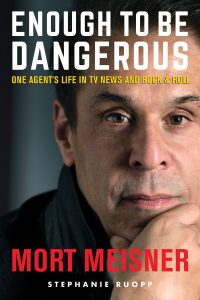
But that’s okay. It’s not a competition. They both share a fierce passion for both Springsteen’s music, as well as for the musician and everything he represents. In fact, Mort is such a diehard fan that he committed two chapters to ‘The Boss’ in his memoir, Enough to Be Dangerous.

You Never Forget Your First Time

Mort had never heard of Bruce Springsteen that fateful night he went to see him in September of 1975 at the age of 22. He recalls that he felt more like a young teenager, sitting front and center and waiting to see this “Bruce Springsteen guy” come on stage. He had no idea what to expect.

Before I knew it, there he was, playing Incident on 57th Street. He went through his array of songs—none of which Id heard—including Born to Run. I was blown away.

For Mort, and presumably the rest of the audience, Born to Run was an anthem for escape and hope. And it resonated deeply during a time of economic hardship and social upheaval. Springsteen was a true storyteller. And he was a rising voice for the working class.

Mort was a rock and roll promoter in Detroit at the time and knew immediately he had to book Springsteen at the Michigan Palace. So he went to talk to Springsteen’s manager. Two weeks later, Springsteen was on stage there. Thus began Mort’s journey toward becoming a Bruce Springsteen groupie.

Following the Boss

Mort’s friend Nelson was equally taken by Springsteen. So the two of them set out to travel around the country to see him perform. On one occasion, they went to Asbury Park, New Jersey, in hopes of catching Springsteen slumming at the famous Stone Pony. It took some finagling. After a visit to sax man extraordinaire Clarence Clemons’ home and several more attempts at the Stone Pony, they finally scored.

Springsteen treated them like royalty. He was genuinely interested in their stories and curious about why they’d come all that way. Then he proceeded to play there for an hour and a half in what was almost a private concert.

Listening to him perform, I felt profoundly different. I cant really explain it. I thought, this guy is like Bob Dylan. But different. More upbeat. More spiritual, maybe? The way I interpreted his songs resonated with something deep inside me. He ran sentences and words together which I didnt understand, but I did not need to understand. He seemed to be able to articulate the collective aspirations of his entire audience. And yet, he got ME. Individually.

It became another life-changing night for Mort.

Still Loving Bruce Springsteen

In his memoir, Mort recounts a childhood riddled with violence and abuse. He lived his young adult years hard and fast, eventually succumbing to drug use in an attempt to outrun the demons that haunted him. But there was always one thing he knew could bring him back to center.

Over the years, from then until now, Ive seen Bruce Springsteen 143 times. Even when I had tragedies and losses in my family, I always took solace in listening to Bruce. He was, and IS, always there as a salve or balm to bring me relief.

His abiding faith in Bruce Springsteen remains to this day. And why not? In these tumultuous times, Springsteen continues to use his platform to advocate for social justice and economic equality. He’s always been the first to participate in benefit concerts, support labor unions, and speak against economic disparities. And his commitment to these causes is evident in his music and public appearances, where he often highlights the need for systemic change. Most recently, he released his song “Streets of Minneapolis” as a response to fatal shootings by federal ICE agents in Minnesota,  describing their tactics as “Gestapo tactics” and calling for accountability.

Even after fifty years in the music business, Bruce Springsteen’s music continues to inspire discussions of economic inequality, social justice, and political responsibility at a time when they’re needed more than ever.

Mort Thanks Bruce Springsteen for His Courage

Mort Meisner felt in only appropriate that his give another callout to Bruce Springsteen. Along with the social justice angle, Springsteen’s sheer willingness to explore new themes and sounds maintains his relevance and influence as a pivotal figure in rock music history.

As someone with deep working-class roots and a passion for social justice, Mort is beyond grateful.

What Are Fireable Offenses for Broadcast TV?

As one of the top TV news talent agents in the country for over three decades, Mort Meisner is an authority on what’s considered fireable offenses for broadcast TV.

He’s had to help a handful of clients over the years who have (inadvertently or otherwise) committed some of these offenses and were seeking guidance in starting anew. It hasn’t been easy.

As far as what is considered a fireable offense, there are two different categories. The first falls under breaches of employer/network policies and professional ethics. The second involves violations of Federal Communications Commission (FCC) regulations – which have gotten a little more difficult to parse out in the past year.

Employer and Ethical Fireable Offenses for Broadcast TV

Since this first category is a more clear-cut, we’ll start here.

Any TV news talent – be it a reporter, anchor, meteorologist, or sports reporter – is subject to internal network or station policies. Failure to comply can lead to termination. The following offenses can be fair game for firing:

  1. Slander/Libel

Steering clear of slander and libel is Broadcast Journalism 101. Or it should be. Making malicious false statements for the sake of causing economic harm or tarnishing an individual’s or company’s reputation can mean major lawsuits for the station. And you can bet this is something they’re not going to tolerate.

  1. Breaching a Conduct Clause

Some on-air TV news talent have contract clauses that cover their behavior outside of work. These include big actions like public scandals and arrests. But they also cover what may appear as lesser offenses such as inappropriate comments on social media. For younger talent who have grown up on the internet, they’re not always aware of this pitfall.

  1. Poor Performance

Sometimes, newer or greener talent is under the impression that just because they have a contract, they can’t be fired. There are, of course, nuances to this. But consistent low ratings, frequent on-air mistakes, lack of productivity, and/or insubordination are all grounds for termination. This is especially true for non-union “at-will” talent.

  1. Misconduct in the Workplace

We hope it goes without saying (but are saying it anyhow), appalling behavior in the workplace is a fireable offense. Among the zero-tolerance offenses on this list are violence, sexual harassment, and time theft.

  1. Violating Journalistic Ethics

A well-educated and versed broadcast journalist knows that using more than one VERIFIABLE source is crucial for any story with a serious allegation. Additionally, conveniently leaving out key facts or engaging in political activities that compromise impartiality, and therefore the news organization’s credibility, can also lead to firing.

FCC Regulations Non-Compliance That Can Lead to Termination

The FCC, at the date of the post, at least, cannot directly fire individuals. But they can fine stations or revoke their license for certain violations. And this, in turn, translates to fireable offenses for both on-air talent and management.

Now, it’s important to note that here in 2026, we’re living in a time where the line between truth and reality is tremendously blurred. And there’s a wealth of mis-, dis-, and malinformation out there obscuring the facts.

So with that disclaimer in mind, we’ll look at what the key FCC has, in the past, considered violations that could lead to fireable offenses:

  1. Broadcasting False Information

No broadcaster should air false information about a crime or catastrophe if s/he knows the information is false and it could cause substantial public harm, such as diverting emergency services.

  1. Intentionally Distorting the News

The FCC claims it does not intervene in journalistic judgment and has considered intentionally slanting or rigging the news as a “heinous act against the public interest.” Documented evidence from someone with direct personal knowledge can prompt an FCC investigation.

  1. Broadcasting Obscene Content

Now that we got one and two out of the way, we land on the violation of broadcasting obscene content. But what is considered obscene? Well, to be ruled obscene, content must meet a three-pronged test. First, it appeals to an average person’s prurient interest. Second, it depicts sexual conduct in a patently offensive way. And finally, it lacks serious literary, artistic, political, or scientific value. Again, making these judgments has become something of a grey area.

  1. Broadcasting Indecent or Profane Content

Indecent content that depicts sexual or patently offensive activities is considered indecent. Profanity is defined as content that’s grossly offensive enough to be considered a public nuisance. Indecent and profane content is prohibited on broadcast TV between 6 a.m. and 10 p.m.

  1. Contest Violations

Finally, stations are required to accurately disclose the material terms of any contest they run and conduct it as announced. Misleading or rigged contests can lead to FCC fines. This one seems pretty straightforward. Go figure.

Are You a Broadcast Journalist Seeking Guidance?

The world of broadcasting is a tricky one right now. Especially where federal oversight is involved. Even so, what are considered fireable offenses in broadcast TV, as they pertain to ethical workplace practices, have not changed much.

So if you’re a broadcast journalist who insists on doing what’s right and working with only a highly ethical and upstanding TV news talent agent, then contact Mort Meisner today.

Mort will provide effective guidance and advice while doing everything in his power to keep your career on the right path.

Striking Authenticity As a Broadcast Journalist

Ask avid viewers of the news and most will tell you they want authenticity in their reporters and anchors. Authenticity is not only refreshing, it’s magnetic.

Audiences don’t tend to remember polished performances as much as those with conviction, honesty, and clarity. They want their news delivered by someone who can stay true to their own voice.

So how can you achieve authenticity as a broadcast journalist where you balance your genuine self with your core journalistic ethics? We’ll take a look.

What Creates Authenticity?

In the simplest of terms, creating authenticity starts with being trustworthy. You want to be credible while posing tough questions with empathy. Stick with the facts and allow them to guide your narrative. As you consider the following, remember that actions speak louder than words.

  1. Establishing and Building Trust

One of the best ways to build trust is by being accountable. Especially these days. You’ll want to think about how you can develop sincere reporting that is unique to you and that will draw an audience. Always respond to questions with fairness and clarity.

In other words, when you establish yourself as trustworthy, you become a go-to source for your audience.

  1. Being Yourself

Experienced TV news talent agents will frequently encourage you to be yourself. What does this mean?

Speak clearly and with confidence. And don’t try to develop a certain affect by changing your accent or your voice. You want to stay relatable and make it easy for the audience to understand the ‘how’ and ‘why’ of a story. Finally, maintain eye contact with the camera.

In essence, don’t squelch your natural self but let it come through in your presentation.

  1. Emphasizing Accuracy and Integrity

Your credibility depends on your being accurate and acting with integrity. Transparency is rule #1 here. Verify the facts of your reporting by using first-hand and multiple sources that can corroborate. Demonstrate your core values by staying fair and respectful. And own up to any mistakes you make.

  1. Insisting on Objectivity

Be aware of your biases and attempt to mitigate them. Ask the hard questions with tact and empathy and avoid being confrontational. Always present multiple sides to reveal the truth.

Achieving Authenticity As a Broadcast Journalist

In a nutshell, establishing and maintaining authenticity as a broadcast journalist starts with knowing what you stand for and how to express it in an ethical way. It means you’re engaged with the audience’s concerns and that you’re fully present in interviews and live segments. You embrace your imperfections while upholding accuracy and transparency.

And last, but certainly not least, you strive to speak the truth. You research and prepare so you can better understand your community and build credibility within it. After all, solid facts allow you to deliver stories with confidence and make a real connection.

Get Help from a Top TV News Talent Agent

If you’re struggling with how to establish authenticity as a broadcast journalist, you’d be wise to seek advice from a TV news talent agent who’s helped countless others to find their voices.

Mort Meisner is that agent.

So contact Mort today. He’ll advise you on best practices to demonstrate your true self and experience real connection with your audience.

Where AI Is a Threat to Broadcast Journalism

Let’s admit it. AI has become the elephant in the room. Everyone is talking about it and many people fear it. TV news reporters, anchors, and meteorologists are not immune to this apprehension.

Almost everyone harbors some concern that AI will eventually render their jobs obsolete. As such, nationally renowned TV news talent agent Mort Meisner is often asked by his clients if they should be nervous about the effect of AI on broadcast journalism.

While Mort can’t see into the future, he is the first to acknowledge to his clients that AI is a threat to broadcast journalism. Just maybe not in the ways they’re thinking.

The Silver Lining of AI in Broadcast Journalism

Here’s the thing.

AI is not an altogether evil entity coming after everybody’s job. Major and minor news organizations are taking advantage of AI’s ability to do things like transcribe interviews, analyze datasets, and summarize large documents so reporters have more time to manage complex and creative work.

Its adeptness at quickly processing information allows it to help uncover stories that are otherwise hidden within huge volumes of data, which could be easily overlooked. In addition, it can produce graphics and pore over audience analytics, which, in turn, enables journalists to experiment with new formats and reach more diverse audiences.

Sounds pretty good, right?

Yet, AI Is a Threat to Broadcast Journalism

There’s no doubt that AI is a threat to broadcast journalism. First off, all of the above-listed benefits of AI translate to efficiency gains that could result in fewer jobs and increased pressure to produce content more quickly. This can compromise the accuracy of such content. Particularly if news organizations don’t recognize this pitfall.

Plus, AI-generated misinformation and fabricated audio/video using a person’s likeness (i.e. deepfakes) make it challenging for people to know what’s real and build trust. This undermines the credibility of broadcast news, where trust is essential. What’s more, it uses predictive statistics to create content. The end result? Generic and unoriginal storytelling that lacks the empathy and critical thinking provided by human journalists.

Finally, AI models are trained on overwhelming amounts of existing news content. This content is often scraped without permission or compensation, which threatens the financial viability of news organizations. This is especially difficult for local broadcasters who don’t have enough resources to attempt negotiations with behemoth tech giants.

What It All Means

What most experts believe at this point is that AI is not a significant threat to human-led journalism. Just check out the first AI-generated anchorperson in China and see how steely and robotic he is.

AI does, however, pose a threat to news organizations that are blind to its impact and fail to adapt in a responsible way. So it’s important that news organizations focus on developing ethical guidelines for using AI as a powerful tool that works in tandem with and even accentuates the human elements of integrity, accountability, and reporting.

In other words, organizations that commit to doing what it takes to ensure that AI supports journalism rather than exploiting it are going to be far more trustworthy. They’re going to be the ones to watch, and the most reputable with whom to work as TV news talent.

Are You Nervous About the Future of AI?

If you’re a TV news reporter, anchor, sports reporter, or meteorologist, it’s normal to be concerned that AI is a threat to broadcast journalism.

But by working with a highly experienced TV news agent like Mort Meisner, you can be certain you’ll always be steered in the right direction and toward an organization that will be right for you.

So contact Mort today. And start making a real name for yourself in the industry.

How TV News Jobs Are Filled by Agents

If you’re a TV news anchor, reporter, or meteorologist, then you know how competitive and even cutthroat the world of broadcast news can be.

And while you may have landed your entry-level job in TV news through traditional applications or networking on your own, if you’re looking to advance your career, having an agent is crucial.

Most TV news jobs are filled by agents. This is especially the case for on-air talent. An experienced TV news talent agent is a valuable intermediary between news organizations and journalists seeking jobs with them.

The Process By Which TV News Jobs Are Filled by Agents

So what makes a TV news talent agent so indispensable? Well, agents can use their vast industry connections and leverage their expertise to help you achieve job placement BEFORE the positions are even advertised.

Here’s how it works:

  1. Acquiring Talent

In their search for solid talent (both new and seasoned), agents attend industry events to make connections and provide referrals. They also regularly monitor social media and digital portfolios to get a sense of whether you have the on-camera presence, writing skills, and overall ‘brand’ to make it in a specific role or position.

  1. Developing and Coaching

Acquiring talent is just the beginning. An experienced TV news talent agent who’s worked in the industry is able to see both your strengths and weaknesses. As such, they’re able to provide career guidance that includes feedback on your work, writing ability, and presentation skills. They may also suggest updating your demo reel and refining your personal branding to make you stand out more. And this isn’t for new talent only. An agent can spot when seasoned talent may need to refresh their personal brand.

  1. Identifying the Right Job

As mentioned above, one of the greatest assets a TV news talent agent has is his or her connections with news directors, general managers, and station group executives. When it comes to filling jobs, these are the decision makers. And they give agents insider access to potential job openings weeks or even months before they are publicly announced.

In return, an agent is able to streamline the recruitment process by providing news organizations with a curated list of their clients who meet the criteria and will best fit the job. So you’re far more likely to land a position where you will thrive.

  1. Placing the Talent

If a news organization expresses interest in you, it’s the agent who handles the negotiation of the terms of employment, including your salary, benefits, contract length, and relocation assistance. Because a skilled TV news talent agent is intimate with this terrain, he or she is typically able to navigate it better than a journalist flying solo. The result? Better compensation and terms for you.

  1. Staying Connected

While placement may seem like the endgame, it should not be. A truly good agent will continue to work with you. He or she will regularly follow up on your progress, offer advice, help resolve conflicts, and be vigilant in staying connected with you. If you have an agent who isn’t doing this, it’s time to find another.

Ready to See How a TV News Talent Agent Can Boost Your Career?

If you’re relatively new to the TV news industry and are feeling stuck, take advantage of the fact that so many TV news jobs are filled by agents.

Or if you already have an agent and they aren’t providing all of the above services, you may not be getting the best results.

Whatever the case, if you’re looking for the consummate TV news agent who’s been in the industry for over three decades, contact Mort Meisner today. And see what he can do to boost your career.