Michelle Tom
TV News Talent Agent Mort Meisner Thanks Bruce Springsteen, Again
Many of us remember the first time we saw a musical act that transformed us. For TV news talent agent Mort Meisner, it was Bruce Springsteen.
In fact, Mort would hold the record in Michigan for attending the most Springsteen concerts, were it not for 97.1 The Ticket radio personality Mike Stone.
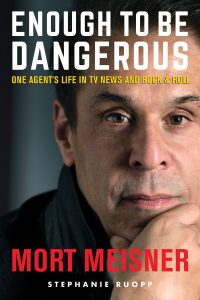
But that’s okay. It’s not a competition. They both share a fierce passion for both Springsteen’s music, as well as for the musician and everything he represents. In fact, Mort is such a diehard fan that he committed two chapters to ‘The Boss’ in his memoir, Enough to Be Dangerous.
You Never Forget Your First Time
Mort had never heard of Bruce Springsteen that fateful night he went to see him in September of 1975 at the age of 22. He recalls that he felt more like a young teenager, sitting front and center and waiting to see this “Bruce Springsteen guy” come on stage. He had no idea what to expect.
Before I knew it, there he was, playing Incident on 57th Street. He went through his array of songs—none of which I’d heard—including Born to Run. I was blown away.
For Mort, and presumably the rest of the audience, Born to Run was an anthem for escape and hope. And it resonated deeply during a time of economic hardship and social upheaval. Springsteen was a true storyteller. And he was a rising voice for the working class.
Mort was a rock and roll promoter in Detroit at the time and knew immediately he had to book Springsteen at the Michigan Palace. So he went to talk to Springsteen’s manager. Two weeks later, Springsteen was on stage there. Thus began Mort’s journey toward becoming a Bruce Springsteen groupie.
Following the Boss
Mort’s friend Nelson was equally taken by Springsteen. So the two of them set out to travel around the country to see him perform. On one occasion, they went to Asbury Park, New Jersey, in hopes of catching Springsteen slumming at the famous Stone Pony. It took some finagling. After a visit to sax man extraordinaire Clarence Clemons’ home and several more attempts at the Stone Pony, they finally scored.
Springsteen treated them like royalty. He was genuinely interested in their stories and curious about why they’d come all that way. Then he proceeded to play there for an hour and a half in what was almost a private concert.
Listening to him perform, I felt profoundly different. I can’t really explain it. I thought, this guy is like Bob Dylan. But different. More upbeat. More spiritual, maybe? The way I interpreted his songs resonated with something deep inside me. He ran sentences and words together which I didn’t understand, but I did not need to understand. He seemed to be able to articulate the collective aspirations of his entire audience. And yet, he got ME. Individually.
It became another life-changing night for Mort.
Still Loving Bruce Springsteen
In his memoir, Mort recounts a childhood riddled with violence and abuse. He lived his young adult years hard and fast, eventually succumbing to drug use in an attempt to outrun the demons that haunted him. But there was always one thing he knew could bring him back to center.
Over the years, from then until now, I’ve seen Bruce Springsteen 143 times. Even when I had tragedies and losses in my family, I always took solace in listening to Bruce. He was, and IS, always there as a salve or balm to bring me relief.
His abiding faith in Bruce Springsteen remains to this day. And why not? In these tumultuous times, Springsteen continues to use his platform to advocate for social justice and economic equality. He’s always been the first to participate in benefit concerts, support labor unions, and speak against economic disparities. And his commitment to these causes is evident in his music and public appearances, where he often highlights the need for systemic change. Most recently, he released his song “Streets of Minneapolis” as a response to fatal shootings by federal ICE agents in Minnesota, describing their tactics as “Gestapo tactics” and calling for accountability.
Even after fifty years in the music business, Bruce Springsteen’s music continues to inspire discussions of economic inequality, social justice, and political responsibility at a time when they’re needed more than ever.
Mort Thanks Bruce Springsteen for His Courage
Mort Meisner felt in only appropriate that his give another callout to Bruce Springsteen. Along with the social justice angle, Springsteen’s sheer willingness to explore new themes and sounds maintains his relevance and influence as a pivotal figure in rock music history.
As someone with deep working-class roots and a passion for social justice, Mort is beyond grateful.
What Are Fireable Offenses for Broadcast TV?
As one of the top TV news talent agents in the country for over three decades, Mort Meisner is an authority on what’s considered fireable offenses for broadcast TV.
He’s had to help a handful of clients over the years who have (inadvertently or otherwise) committed some of these offenses and were seeking guidance in starting anew. It hasn’t been easy.
As far as what is considered a fireable offense, there are two different categories. The first falls under breaches of employer/network policies and professional ethics. The second involves violations of Federal Communications Commission (FCC) regulations – which have gotten a little more difficult to parse out in the past year.
Employer and Ethical Fireable Offenses for Broadcast TV
Since this first category is a more clear-cut, we’ll start here.
Any TV news talent – be it a reporter, anchor, meteorologist, or sports reporter – is subject to internal network or station policies. Failure to comply can lead to termination. The following offenses can be fair game for firing:
Slander/Libel
Steering clear of slander and libel is Broadcast Journalism 101. Or it should be. Making malicious false statements for the sake of causing economic harm or tarnishing an individual’s or company’s reputation can mean major lawsuits for the station. And you can bet this is something they’re not going to tolerate.
Breaching a Conduct Clause
Some on-air TV news talent have contract clauses that cover their behavior outside of work. These include big actions like public scandals and arrests. But they also cover what may appear as lesser offenses such as inappropriate comments on social media. For younger talent who have grown up on the internet, they’re not always aware of this pitfall.
Poor Performance
Sometimes, newer or greener talent is under the impression that just because they have a contract, they can’t be fired. There are, of course, nuances to this. But consistent low ratings, frequent on-air mistakes, lack of productivity, and/or insubordination are all grounds for termination. This is especially true for non-union “at-will” talent.
Misconduct in the Workplace
We hope it goes without saying (but are saying it anyhow), appalling behavior in the workplace is a fireable offense. Among the zero-tolerance offenses on this list are violence, sexual harassment, and time theft.
Violating Journalistic Ethics
A well-educated and versed broadcast journalist knows that using more than one VERIFIABLE source is crucial for any story with a serious allegation. Additionally, conveniently leaving out key facts or engaging in political activities that compromise impartiality, and therefore the news organization’s credibility, can also lead to firing.
FCC Regulations Non-Compliance That Can Lead to Termination
The FCC, at the date of the post, at least, cannot directly fire individuals. But they can fine stations or revoke their license for certain violations. And this, in turn, translates to fireable offenses for both on-air talent and management.
Now, it’s important to note that here in 2026, we’re living in a time where the line between truth and reality is tremendously blurred. And there’s a wealth of mis-, dis-, and malinformation out there obscuring the facts.
So with that disclaimer in mind, we’ll look at what the key FCC has, in the past, considered violations that could lead to fireable offenses:
Broadcasting False Information
No broadcaster should air false information about a crime or catastrophe if s/he knows the information is false and it could cause substantial public harm, such as diverting emergency services.
Intentionally Distorting the News
The FCC claims it does not intervene in journalistic judgment and has considered intentionally slanting or rigging the news as a “heinous act against the public interest.” Documented evidence from someone with direct personal knowledge can prompt an FCC investigation.
Broadcasting Obscene Content
Now that we got one and two out of the way, we land on the violation of broadcasting obscene content. But what is considered obscene? Well, to be ruled obscene, content must meet a three-pronged test. First, it appeals to an average person’s prurient interest. Second, it depicts sexual conduct in a patently offensive way. And finally, it lacks serious literary, artistic, political, or scientific value. Again, making these judgments has become something of a grey area.
Broadcasting Indecent or Profane Content
Indecent content that depicts sexual or patently offensive activities is considered indecent. Profanity is defined as content that’s grossly offensive enough to be considered a public nuisance. Indecent and profane content is prohibited on broadcast TV between 6 a.m. and 10 p.m.
Contest Violations
Finally, stations are required to accurately disclose the material terms of any contest they run and conduct it as announced. Misleading or rigged contests can lead to FCC fines. This one seems pretty straightforward. Go figure.
Are You a Broadcast Journalist Seeking Guidance?
The world of broadcasting is a tricky one right now. Especially where federal oversight is involved. Even so, what are considered fireable offenses in broadcast TV, as they pertain to ethical workplace practices, have not changed much.
So if you’re a broadcast journalist who insists on doing what’s right and working with only a highly ethical and upstanding TV news talent agent, then contact Mort Meisner today.
Mort will provide effective guidance and advice while doing everything in his power to keep your career on the right path.
Striking Authenticity As a Broadcast Journalist
Ask avid viewers of the news and most will tell you they want authenticity in their reporters and anchors. Authenticity is not only refreshing, it’s magnetic.
Audiences don’t tend to remember polished performances as much as those with conviction, honesty, and clarity. They want their news delivered by someone who can stay true to their own voice.
So how can you achieve authenticity as a broadcast journalist where you balance your genuine self with your core journalistic ethics? We’ll take a look.
What Creates Authenticity?
In the simplest of terms, creating authenticity starts with being trustworthy. You want to be credible while posing tough questions with empathy. Stick with the facts and allow them to guide your narrative. As you consider the following, remember that actions speak louder than words.
Establishing and Building Trust
One of the best ways to build trust is by being accountable. Especially these days. You’ll want to think about how you can develop sincere reporting that is unique to you and that will draw an audience. Always respond to questions with fairness and clarity.
In other words, when you establish yourself as trustworthy, you become a go-to source for your audience.
Being Yourself
Experienced TV news talent agents will frequently encourage you to be yourself. What does this mean?
Speak clearly and with confidence. And don’t try to develop a certain affect by changing your accent or your voice. You want to stay relatable and make it easy for the audience to understand the ‘how’ and ‘why’ of a story. Finally, maintain eye contact with the camera.
In essence, don’t squelch your natural self but let it come through in your presentation.
Emphasizing Accuracy and Integrity
Your credibility depends on your being accurate and acting with integrity. Transparency is rule #1 here. Verify the facts of your reporting by using first-hand and multiple sources that can corroborate. Demonstrate your core values by staying fair and respectful. And own up to any mistakes you make.
Insisting on Objectivity
Be aware of your biases and attempt to mitigate them. Ask the hard questions with tact and empathy and avoid being confrontational. Always present multiple sides to reveal the truth.
Achieving Authenticity As a Broadcast Journalist
In a nutshell, establishing and maintaining authenticity as a broadcast journalist starts with knowing what you stand for and how to express it in an ethical way. It means you’re engaged with the audience’s concerns and that you’re fully present in interviews and live segments. You embrace your imperfections while upholding accuracy and transparency.
And last, but certainly not least, you strive to speak the truth. You research and prepare so you can better understand your community and build credibility within it. After all, solid facts allow you to deliver stories with confidence and make a real connection.
Get Help from a Top TV News Talent Agent
If you’re struggling with how to establish authenticity as a broadcast journalist, you’d be wise to seek advice from a TV news talent agent who’s helped countless others to find their voices.
Mort Meisner is that agent.
So contact Mort today. He’ll advise you on best practices to demonstrate your true self and experience real connection with your audience.
Tamika Cody
Brian Didlake
Where AI Is a Threat to Broadcast Journalism
Let’s admit it. AI has become the elephant in the room. Everyone is talking about it and many people fear it. TV news reporters, anchors, and meteorologists are not immune to this apprehension.
Almost everyone harbors some concern that AI will eventually render their jobs obsolete. As such, nationally renowned TV news talent agent Mort Meisner is often asked by his clients if they should be nervous about the effect of AI on broadcast journalism.
While Mort can’t see into the future, he is the first to acknowledge to his clients that AI is a threat to broadcast journalism. Just maybe not in the ways they’re thinking.
The Silver Lining of AI in Broadcast Journalism
Here’s the thing.
AI is not an altogether evil entity coming after everybody’s job. Major and minor news organizations are taking advantage of AI’s ability to do things like transcribe interviews, analyze datasets, and summarize large documents so reporters have more time to manage complex and creative work.
Its adeptness at quickly processing information allows it to help uncover stories that are otherwise hidden within huge volumes of data, which could be easily overlooked. In addition, it can produce graphics and pore over audience analytics, which, in turn, enables journalists to experiment with new formats and reach more diverse audiences.
Sounds pretty good, right?
Yet, AI Is a Threat to Broadcast Journalism
There’s no doubt that AI is a threat to broadcast journalism. First off, all of the above-listed benefits of AI translate to efficiency gains that could result in fewer jobs and increased pressure to produce content more quickly. This can compromise the accuracy of such content. Particularly if news organizations don’t recognize this pitfall.
Plus, AI-generated misinformation and fabricated audio/video using a person’s likeness (i.e. deepfakes) make it challenging for people to know what’s real and build trust. This undermines the credibility of broadcast news, where trust is essential. What’s more, it uses predictive statistics to create content. The end result? Generic and unoriginal storytelling that lacks the empathy and critical thinking provided by human journalists.
Finally, AI models are trained on overwhelming amounts of existing news content. This content is often scraped without permission or compensation, which threatens the financial viability of news organizations. This is especially difficult for local broadcasters who don’t have enough resources to attempt negotiations with behemoth tech giants.
What It All Means
What most experts believe at this point is that AI is not a significant threat to human-led journalism. Just check out the first AI-generated anchorperson in China and see how steely and robotic he is.
AI does, however, pose a threat to news organizations that are blind to its impact and fail to adapt in a responsible way. So it’s important that news organizations focus on developing ethical guidelines for using AI as a powerful tool that works in tandem with and even accentuates the human elements of integrity, accountability, and reporting.
In other words, organizations that commit to doing what it takes to ensure that AI supports journalism rather than exploiting it are going to be far more trustworthy. They’re going to be the ones to watch, and the most reputable with whom to work as TV news talent.
Are You Nervous About the Future of AI?
If you’re a TV news reporter, anchor, sports reporter, or meteorologist, it’s normal to be concerned that AI is a threat to broadcast journalism.
But by working with a highly experienced TV news agent like Mort Meisner, you can be certain you’ll always be steered in the right direction and toward an organization that will be right for you.
So contact Mort today. And start making a real name for yourself in the industry.
How TV News Jobs Are Filled by Agents
If you’re a TV news anchor, reporter, or meteorologist, then you know how competitive and even cutthroat the world of broadcast news can be.
And while you may have landed your entry-level job in TV news through traditional applications or networking on your own, if you’re looking to advance your career, having an agent is crucial.
Most TV news jobs are filled by agents. This is especially the case for on-air talent. An experienced TV news talent agent is a valuable intermediary between news organizations and journalists seeking jobs with them.
The Process By Which TV News Jobs Are Filled by Agents
So what makes a TV news talent agent so indispensable? Well, agents can use their vast industry connections and leverage their expertise to help you achieve job placement BEFORE the positions are even advertised.
Here’s how it works:
Acquiring Talent
In their search for solid talent (both new and seasoned), agents attend industry events to make connections and provide referrals. They also regularly monitor social media and digital portfolios to get a sense of whether you have the on-camera presence, writing skills, and overall ‘brand’ to make it in a specific role or position.
Developing and Coaching
Acquiring talent is just the beginning. An experienced TV news talent agent who’s worked in the industry is able to see both your strengths and weaknesses. As such, they’re able to provide career guidance that includes feedback on your work, writing ability, and presentation skills. They may also suggest updating your demo reel and refining your personal branding to make you stand out more. And this isn’t for new talent only. An agent can spot when seasoned talent may need to refresh their personal brand.
Identifying the Right Job
As mentioned above, one of the greatest assets a TV news talent agent has is his or her connections with news directors, general managers, and station group executives. When it comes to filling jobs, these are the decision makers. And they give agents insider access to potential job openings weeks or even months before they are publicly announced.
In return, an agent is able to streamline the recruitment process by providing news organizations with a curated list of their clients who meet the criteria and will best fit the job. So you’re far more likely to land a position where you will thrive.
Placing the Talent
If a news organization expresses interest in you, it’s the agent who handles the negotiation of the terms of employment, including your salary, benefits, contract length, and relocation assistance. Because a skilled TV news talent agent is intimate with this terrain, he or she is typically able to navigate it better than a journalist flying solo. The result? Better compensation and terms for you.
Staying Connected
While placement may seem like the endgame, it should not be. A truly good agent will continue to work with you. He or she will regularly follow up on your progress, offer advice, help resolve conflicts, and be vigilant in staying connected with you. If you have an agent who isn’t doing this, it’s time to find another.
Ready to See How a TV News Talent Agent Can Boost Your Career?
If you’re relatively new to the TV news industry and are feeling stuck, take advantage of the fact that so many TV news jobs are filled by agents.
Or if you already have an agent and they aren’t providing all of the above services, you may not be getting the best results.
Whatever the case, if you’re looking for the consummate TV news agent who’s been in the industry for over three decades, contact Mort Meisner today. And see what he can do to boost your career.
Jake Bartecki
Name: Jake Bartecki
Market: N/A
Current Station: News Channel Nebraska
Current Title: Sports Reporter/Anchor/MMJ
Preferred Title: Sports Reporter/Anchor/MMJ
Experience: 8 Years
Agent Name: Steve Koles
Agent Phone: (248) 545-2222
Agency: Mort Meisner Associates